
Cover Feature7 min read
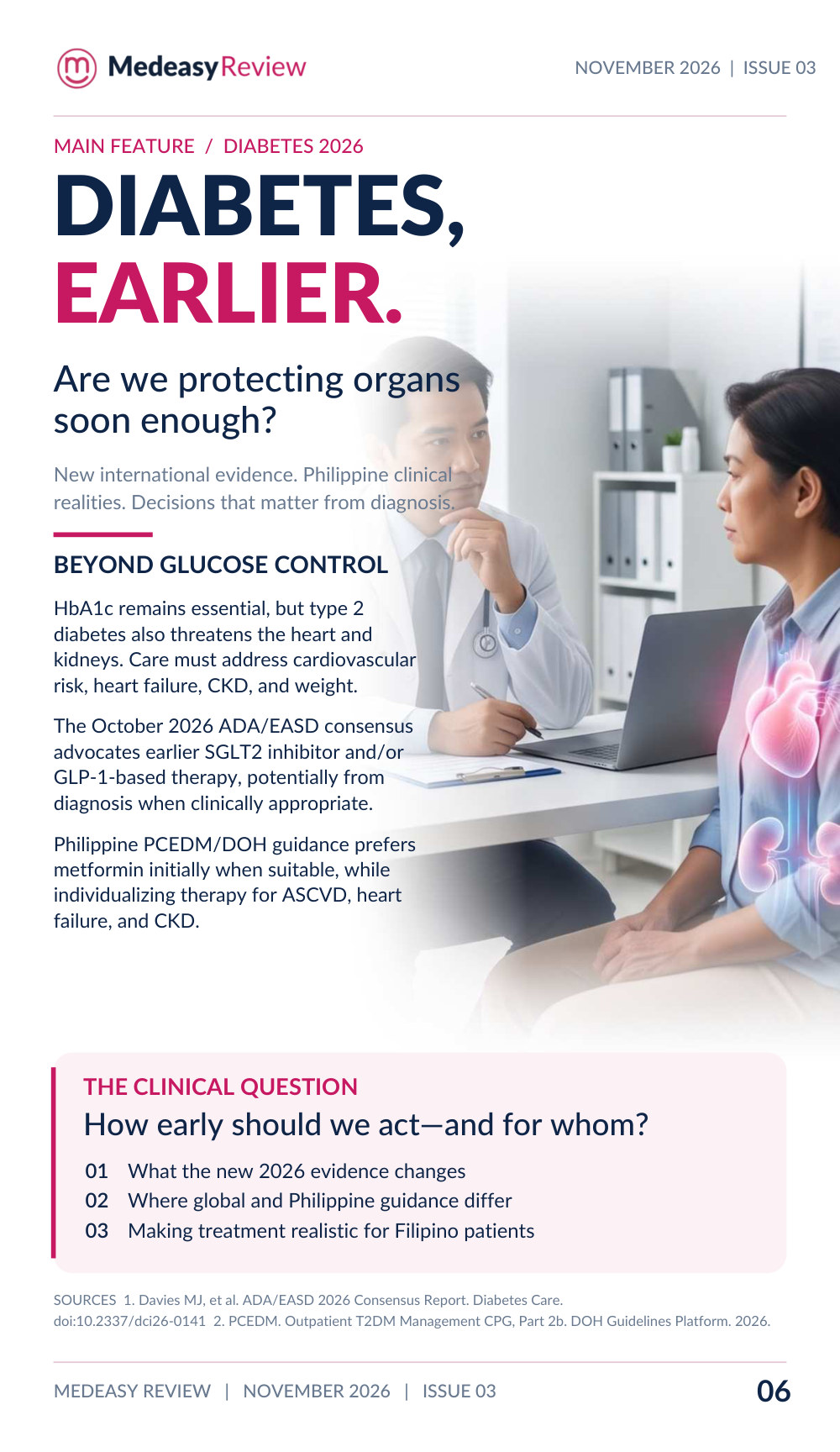
Diabetes, Earlier.
Are we protecting organs soon enough? New international evidence. Philippine clinical realities. Decisions that matter from diagnosis.
Read articleEvidence for a brighter practice.
Clinical evidence, practical interpretation, and medical innovation for today’s physicians.
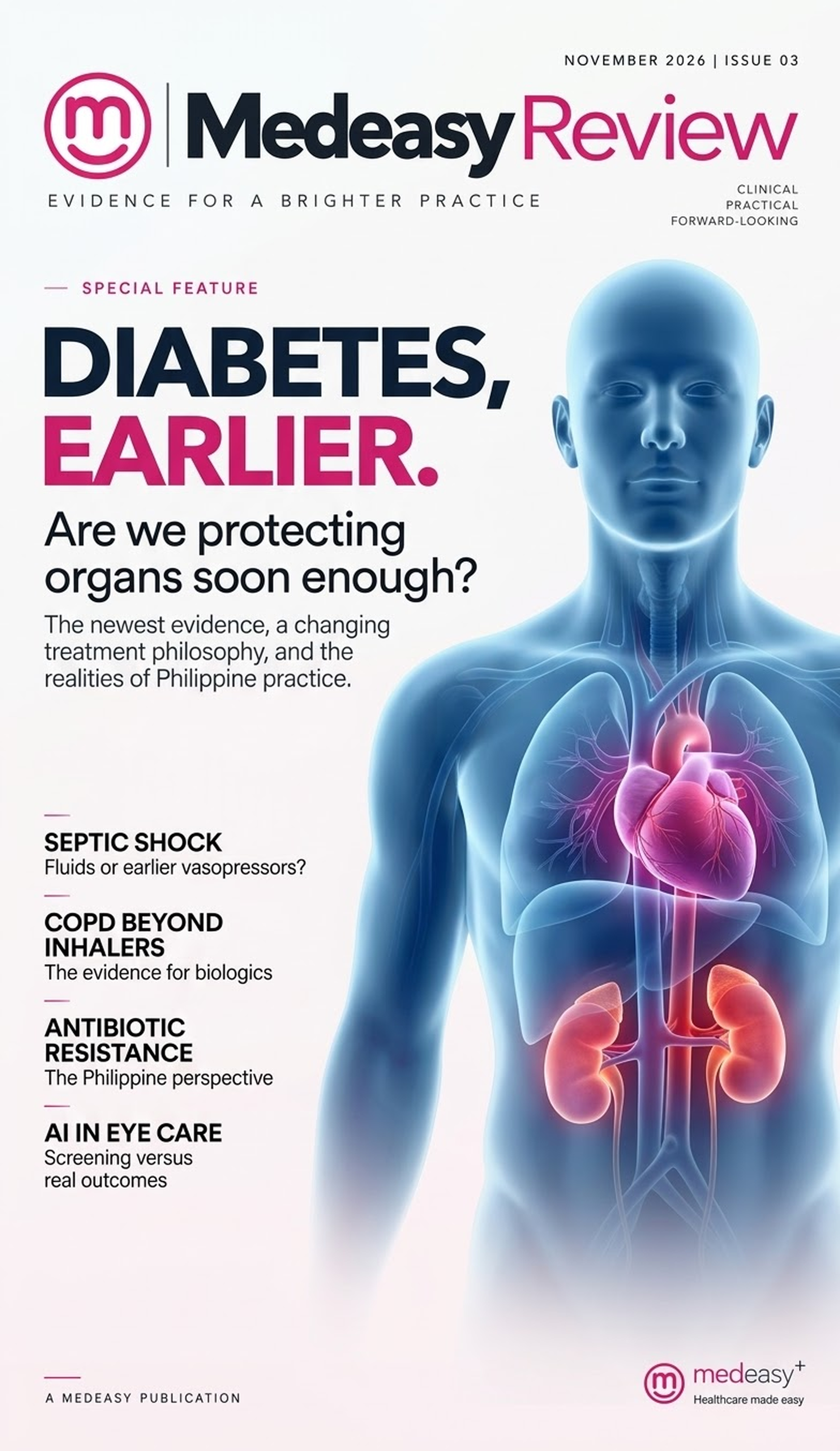
The newest evidence, a changing treatment philosophy, and the realities of Philippine practice.
Explore IssueAre we protecting organs soon enough? New international evidence. Philippine clinical realities. Decisions that matter from diagnosis.
Read article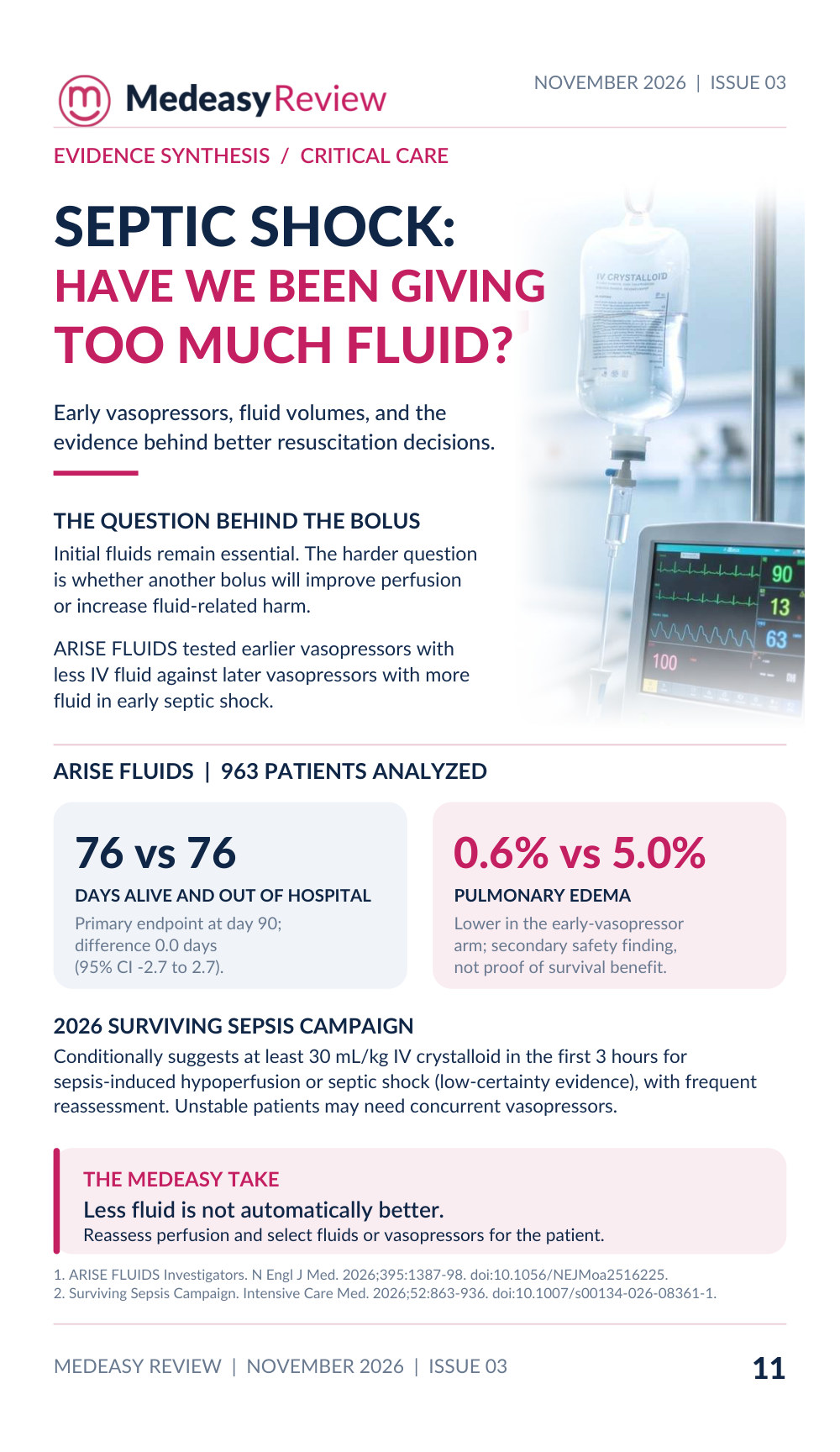
Early vasopressors, fluid volumes, and the evidence behind better resuscitation decisions.
Read article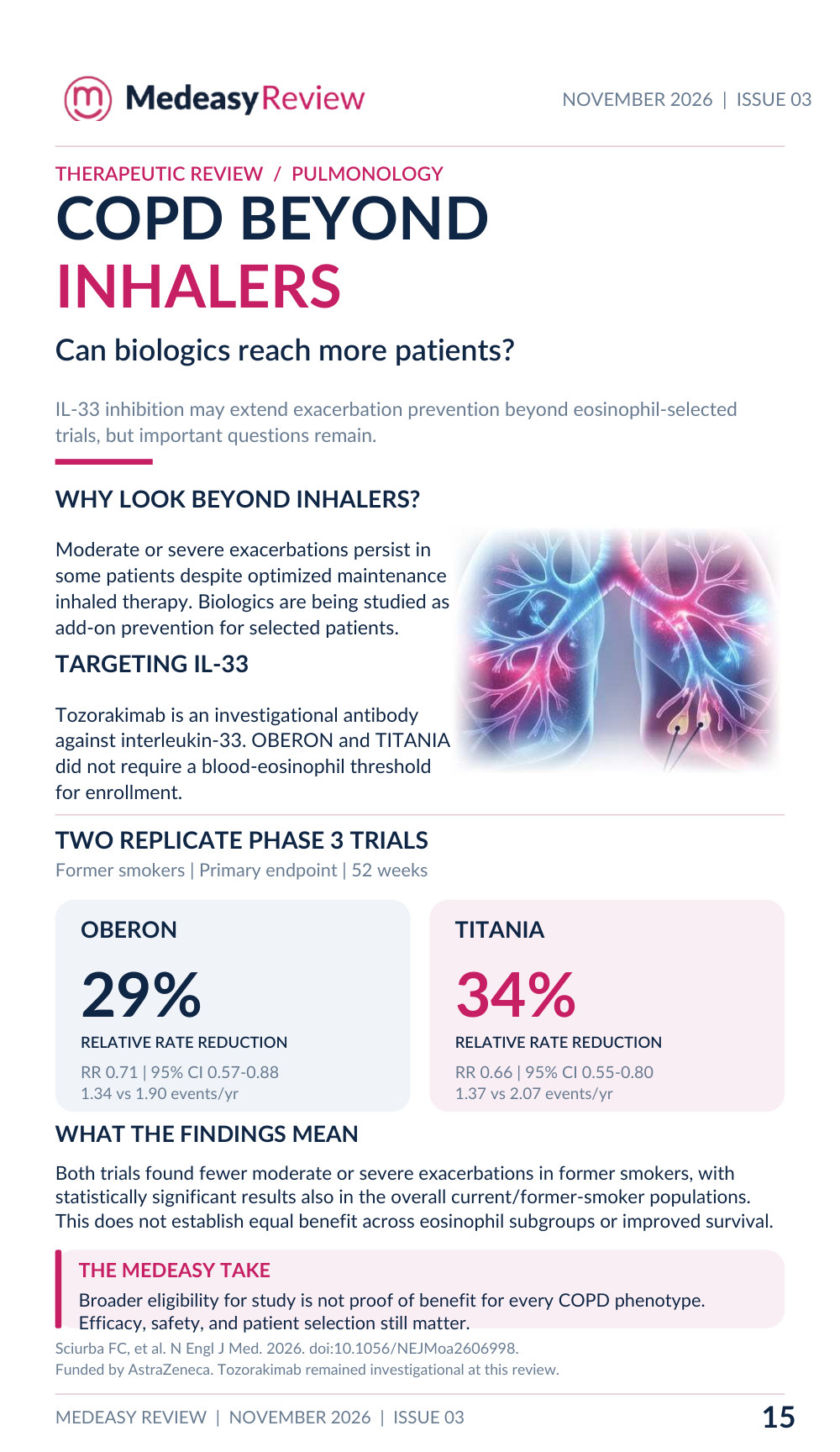
Can biologics reach more patients? IL-33 inhibition may extend exacerbation prevention beyond eosinophil-selected trials, but important questions remain.
Read articlePapers worth knowing, distilled into the finding and the bedside implication.
ExploreEmerging science with enough context to separate promise from proof.
ExploreClear pathways for decisions that show up in clinic every day.
ExploreNew diagnostics, therapies, and frameworks shaping tomorrow's care.
ExploreFocused reviews of mechanism, efficacy, safety, and patient selection.
ExploreA clinical lens on wearables, devices, and digital health.
ExploreSelected from November 2026 · Issue 03 Evidence Update — the finding, the caveat, and the clinical implication.
In a pragmatic, open-label trial of 513,358 adults, RSV-related respiratory hospitalization was 0.16 vs 0.55 events per 1,000 person-years. Estimated effectiveness: 70.3% (95% CI 49.7–83.2).
The absolute reduction was 0.39 events per 1,000 person-years. Consider patient risk, local eligibility and access.
Among 142,250 participants aged 50–77, stage III–IV incidence across 12 prespecified cancers was not significantly lower after three rounds: incidence rate ratio 1.03 (95% CI 0.92–1.14), P=0.63.
The primary late-stage cancer endpoint was neutral. Better detection alone does not prove better patient outcomes.
In 709 children with newly diagnosed high-risk B-cell ALL, estimated 4-year EFS was 83.0% vs 70.3%; HR 0.51 (95% CI 0.35–0.73). Interim analysis; median follow-up 2.9 years.
Only two selected chemotherapy cycles were replaced. EFS improved, but neurotoxic events were more frequent (12.0% vs 3.2%).
Two placebo-controlled phase 3 trials enrolled 168 and 105 people. At 12 weeks, MWT sleep-latency change was +14.3 to +19.8 minutes with oveporexton vs −0.4 to −0.8 with placebo.
Wakefulness and cataplexy improved. Urinary frequency and transient insomnia were common; long-term safety remains uncertain.
Concise clinical tools designed for fast recall at the point of care - useful first, promotional second.
Coming next: clinical calculators and quick-reference tools.Open MedeasyA practical guide to arterial blood gas interpretation made simple.
Available in MedeasyA systematic, high-yield guide to ECG interpretation in daily practice.
Available in MedeasyThe newest evidence, a changing treatment philosophy, and the realities of Philippine practice.
Read issue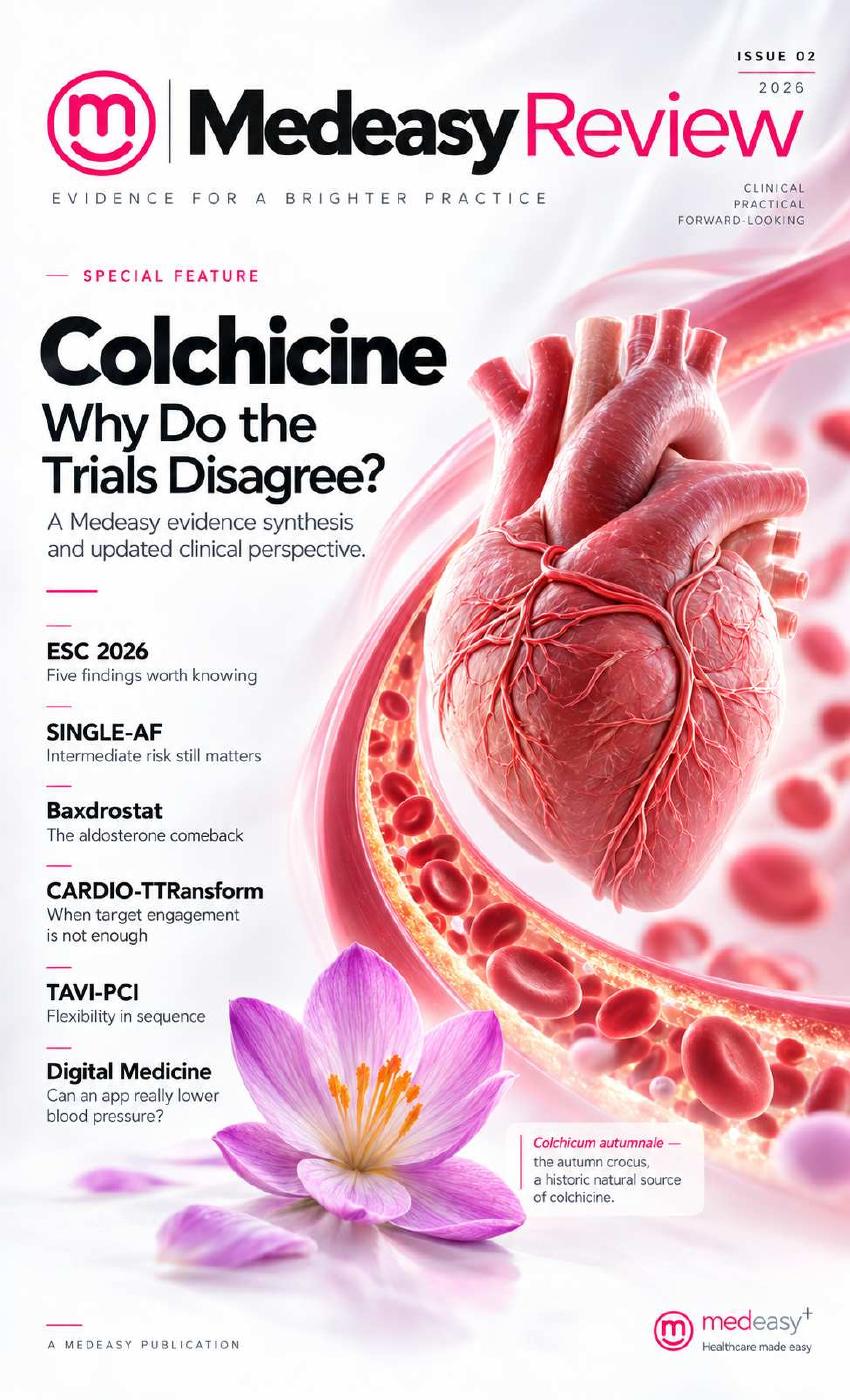
A closer look at low-dose colchicine, new cardiovascular evidence from ESC 2026, and practical insights for today's physicians.
Read issue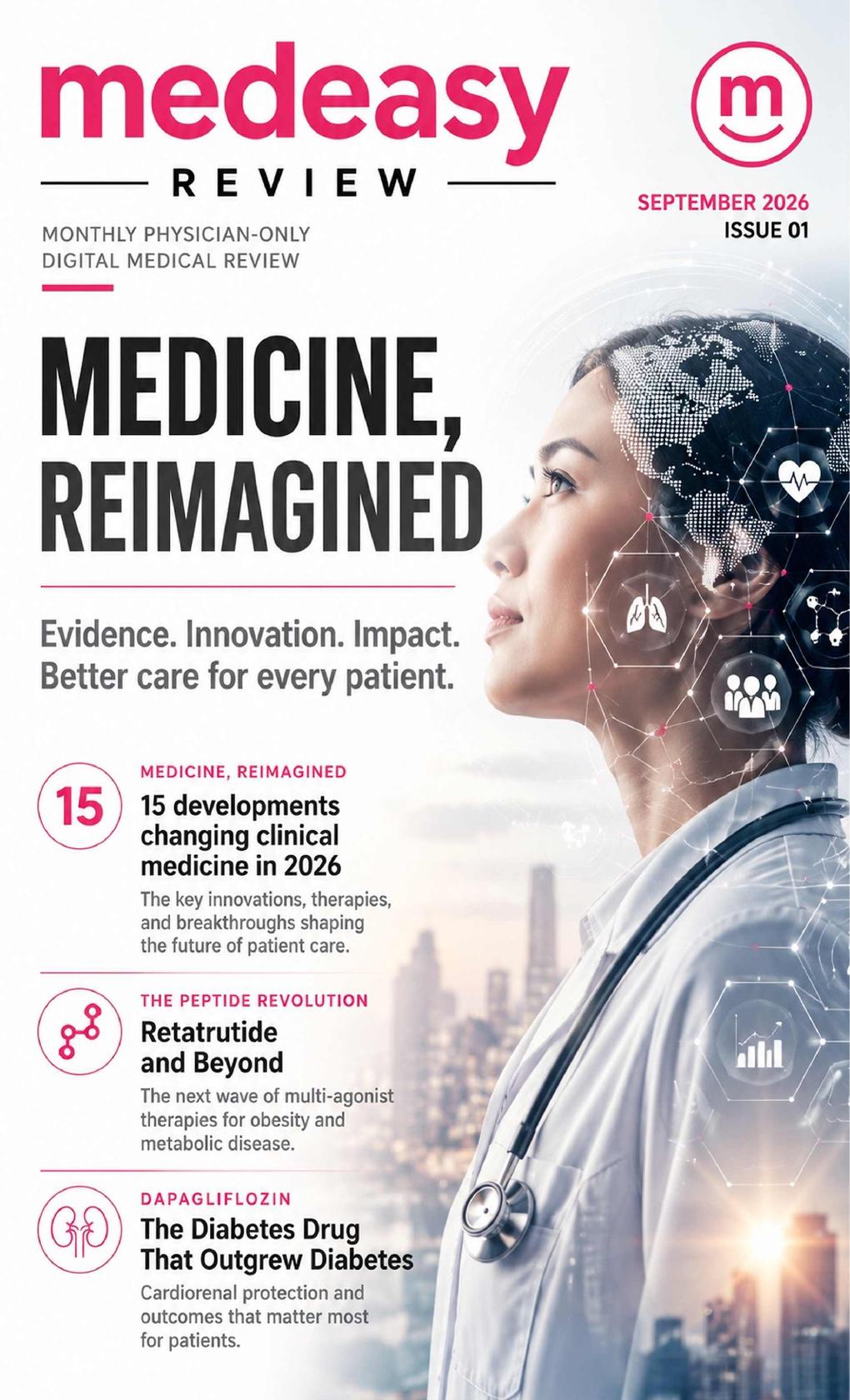
Evidence. Innovation. Impact. A physician-first issue on the science and tools reshaping care.
Read issueNew evidence, practical guidance, and emerging medicine - curated for physicians.

