Clinical takeaway
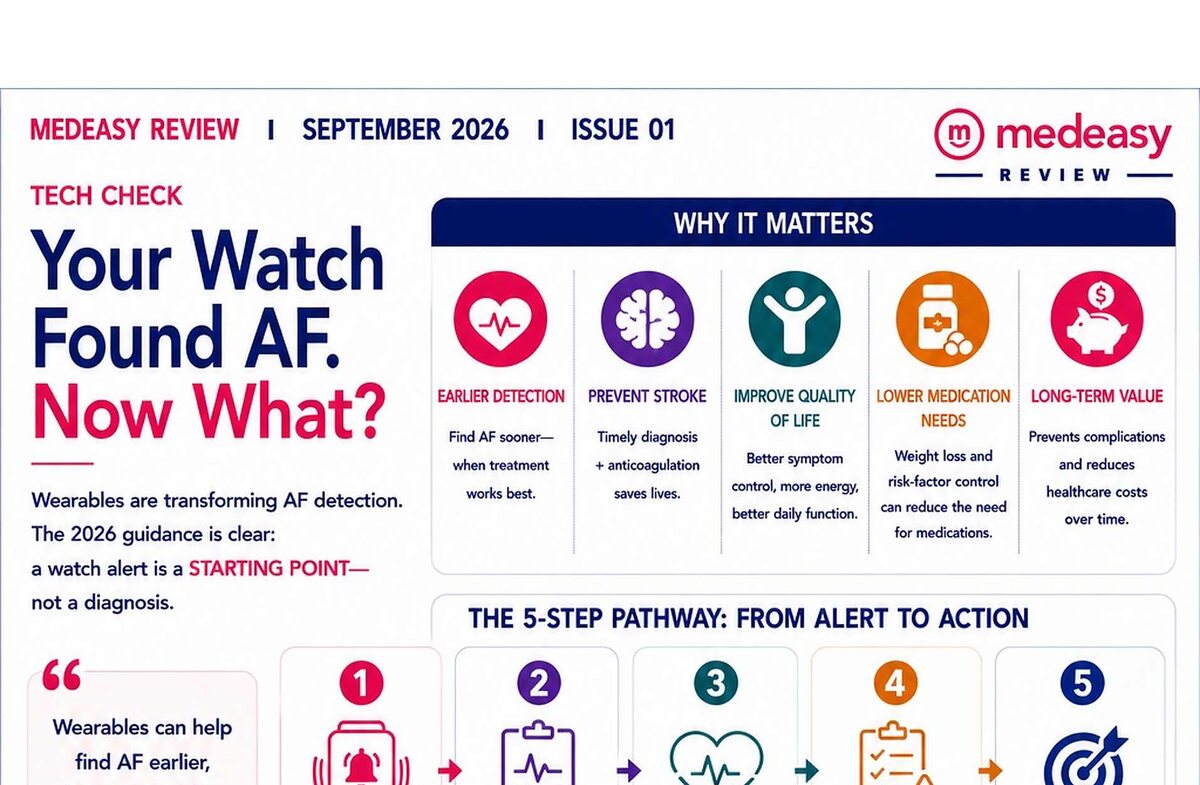
Review the tracing, confirm atrial fibrillation clinically, assess stroke and bleeding risk, and treat the patient rather than the alert.
From alert to action
- Review signal quality and the recorded tracing.
- Confirm atrial fibrillation with a medical-grade ECG or rhythm strip.
- Assess symptoms, comorbidities, stroke risk, and bleeding risk.
- Start or adjust therapy only after confirmation and risk assessment.
False positives happen
Premature beats, motion, and artifact can trigger irregular-rhythm notifications. Repeat poor-quality recordings and interpret them in clinical context.
AF burden
Time spent in atrial fibrillation may add useful context, but thresholds and management implications are still evolving. Combine burden with symptoms, risk profile, and patient goals.
References
- January CT, et al. 2026 AHA/ACC/HRS Guideline for Atrial Fibrillation.
- Hindricks G, et al. Eur Heart J. 2026.
Educational summary from Medeasy Review Issue 01. Verify recommendations against current guidelines, local approvals, product information, and the individual patient's circumstances.