Clinical takeaway
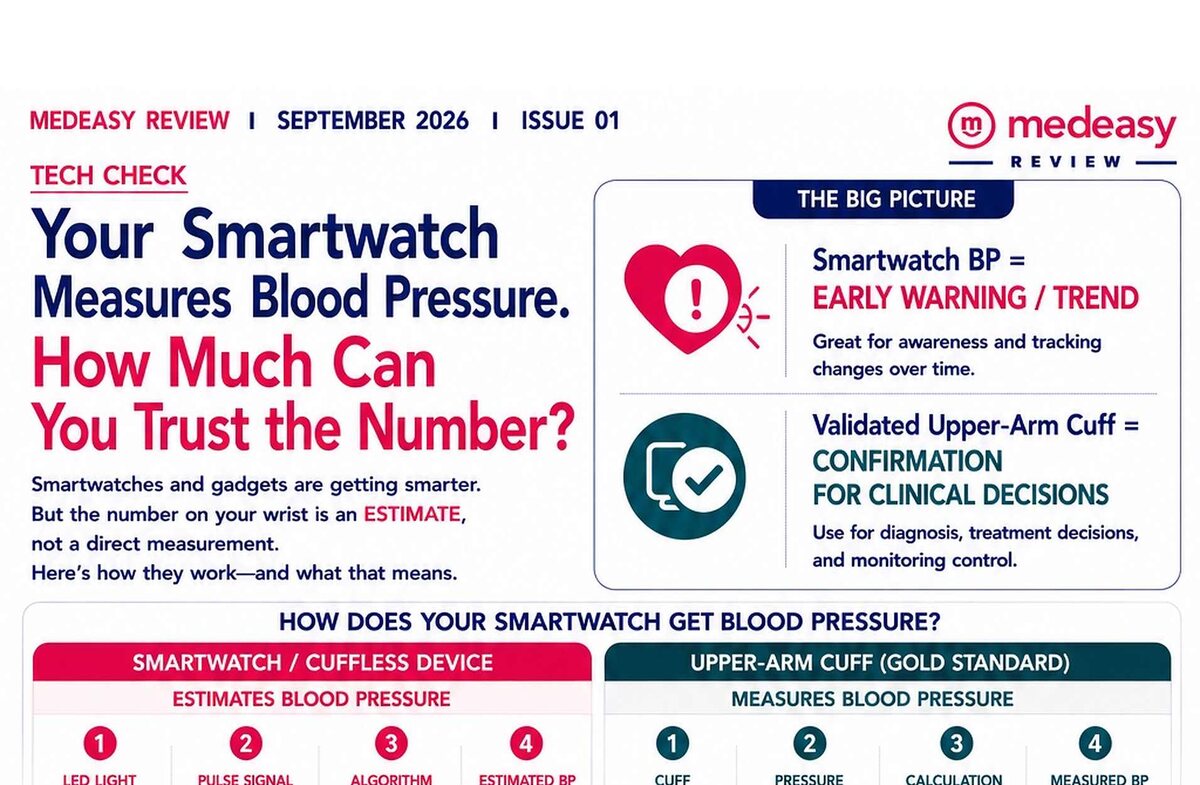
Treat cuffless smartwatch blood pressure as an early warning or trend and confirm clinically important readings with a validated upper-arm cuff.
Estimate versus measurement
Most cuffless devices infer blood pressure from pulse-wave signals, algorithms, and personal data. A validated upper-arm cuff measures pressure oscillations directly and remains the clinical standard.
Why readings vary
- Movement and wrist position.
- Skin tone, vessel depth, and vascular stiffness.
- Calibration and algorithm limitations.
- Exercise, stress, caffeine, meals, cold hands, and a full bladder.
Safe use
- Use watch readings to notice possible high or low blood pressure and track trends.
- Do not diagnose hypertension from a watch alone.
- Do not start, stop, or change medication on the basis of cuffless readings alone.
- Confirm with a validated upper-arm cuff and clinical judgment.
References
- Sharman JE, et al. Circulation. 2025.
- Whelton PK, et al. Circulation. 2025.
- Bohm M, et al. Eur Heart J. 2024.
Educational summary from Medeasy Review Issue 01. Verify recommendations against current guidelines, local approvals, product information, and the individual patient's circumstances.