Clinical takeaway
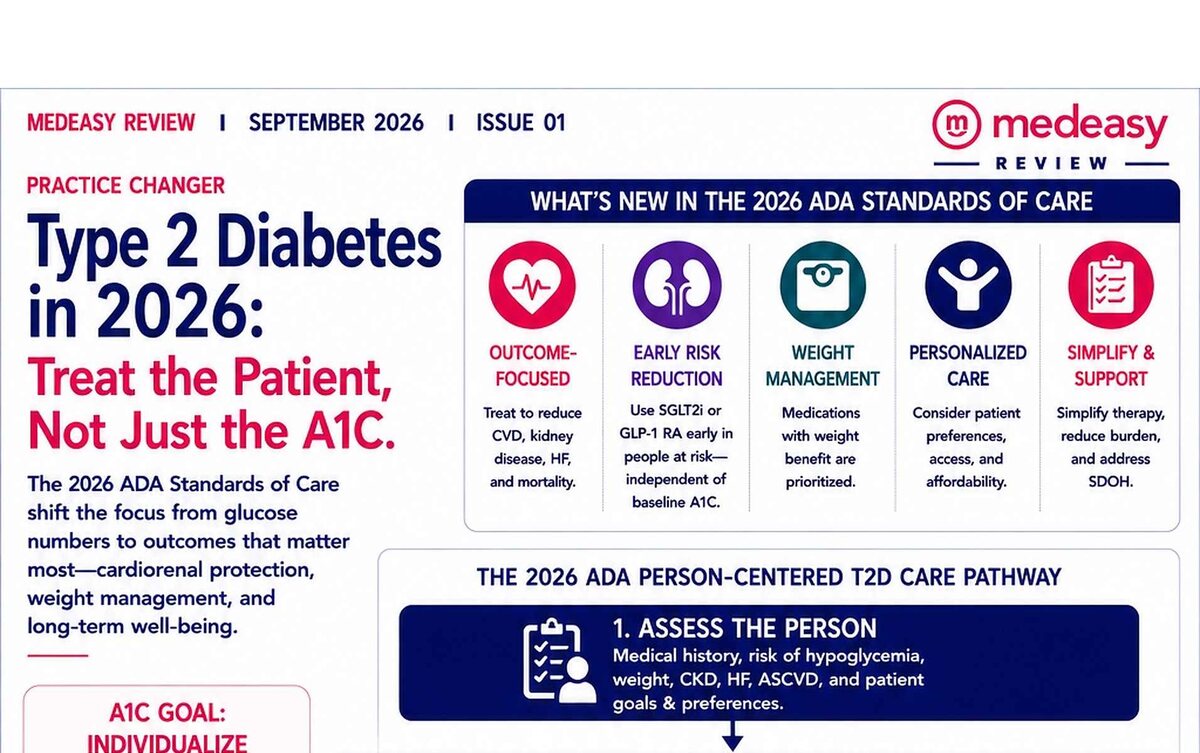
Choose therapy around the patient's dominant cardiovascular, heart-failure, kidney, weight, and hypoglycemia risks, then optimize glycemia.
Assess the whole person
Start with medical history, hypoglycemia risk, weight, CKD, heart failure, ASCVD, treatment goals, preferences, access, and affordability. For many nonpregnant adults, an A1C below 7% is reasonable, but the target should be individualized.
Identify the dominant need
- ASCVD: use a GLP-1 receptor agonist and/or SGLT2 inhibitor with demonstrated cardiovascular benefit.
- Heart failure: prioritize an SGLT2 inhibitor.
- Chronic kidney disease: use an SGLT2 inhibitor or GLP-1 receptor agonist with kidney benefit according to renal function and indication.
- Obesity: prioritize therapies with meaningful weight benefit.
Then optimize glycemia
Add, adjust, or intensify therapy while minimizing hypoglycemia, treatment burden, and adverse effects. Shared decision-making remains essential.
References
- American Diabetes Association. Standards of Care in Diabetes - 2026. Diabetes Care. 2026;49(Suppl 1).
Educational summary from Medeasy Review Issue 01. Verify recommendations against current guidelines, local approvals, product information, and the individual patient's circumstances.