Clinical takeaway
BMI remains a useful screening tool, but diagnosis and treatment planning improve when clinicians also assess abdominal adiposity, comorbidity, and functional impact.
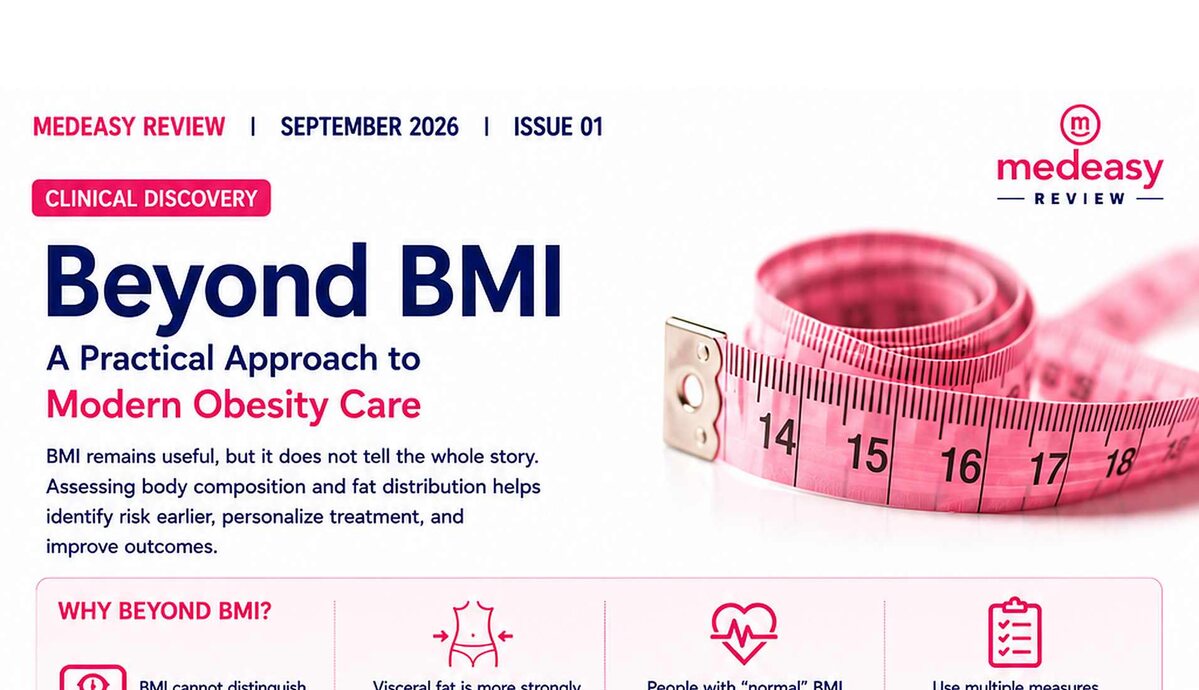
What BMI misses
- BMI does not distinguish fat from muscle.
- Visceral and ectopic fat are more closely linked to cardiometabolic risk.
- A person with a 'normal' BMI can still carry clinically important adiposity.
A simple additional measure
Waist-to-height ratio adds a practical marker of abdominal adiposity. A ratio above 0.50 suggests increased cardiometabolic risk and should be interpreted alongside BMI, comorbidities, physical function, and the broader clinical assessment.
A practical pathway
- Screen with BMI, waist circumference, and waist-to-height ratio.
- Stratify cardiometabolic and functional risk.
- Personalize lifestyle and pharmacologic care.
- Track metabolic markers and health impact, not weight alone.
References
- Wilding JPH, et al. Nat Rev Endocrinol. 2026;22:453-470.
- Busetto L, et al. Nat Med. 2024;30:2395-2399.
Educational summary from Medeasy Review Issue 01. Verify recommendations against current guidelines, local approvals, product information, and the individual patient's circumstances.