Clinical takeaway
Confirm the diagnosis, estimate total cardiovascular risk, begin lifestyle therapy for all, and add medication when risk or persistence warrants it.
Confirm before treating
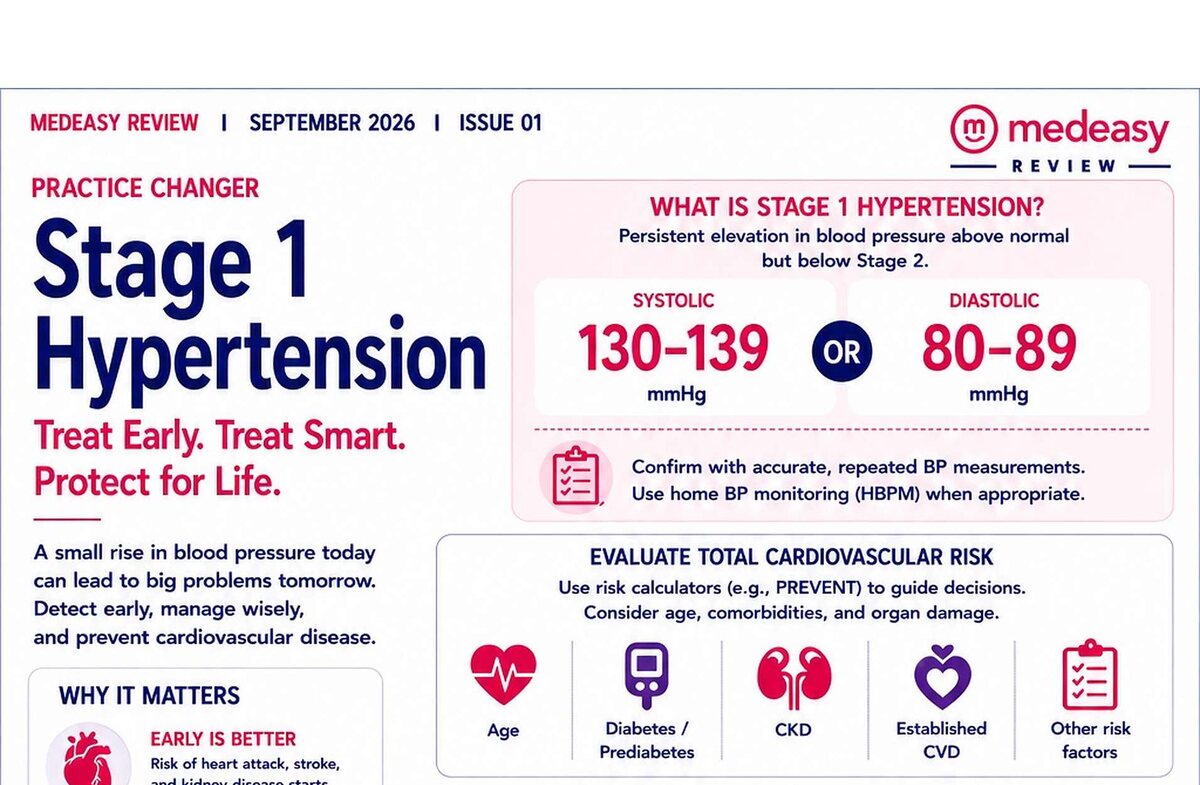
Stage 1 hypertension is defined here as systolic blood pressure 130-139 mmHg or diastolic blood pressure 80-89 mmHg. Use accurate repeated measurements and home blood-pressure monitoring when appropriate.
Risk determines urgency
- Lower-risk adults without CVD, CKD, diabetes, or target-organ damage: lifestyle modification and reassessment in 3-6 months.
- Higher-risk adults or those with CVD, CKD, diabetes, or target-organ damage: lifestyle modification plus pharmacologic therapy.
- Individualize the goal for most adults around less than 130/80 mmHg, considering tolerance and clinical factors.
Pathway to control
- Start with lifestyle therapy and indicated medication.
- Use single-pill combinations when appropriate if control is not achieved.
- Titrate and review adherence, efficacy, and adverse effects every 4-6 weeks until goal.
- Evaluate apparent resistant hypertension for secondary causes.
References
- American Heart Association. 2025 High Blood Pressure Guideline.
- International Society of Hypertension. Global Hypertension Practice Guidelines. 2025.
Educational summary from Medeasy Review Issue 01. Verify recommendations against current guidelines, local approvals, product information, and the individual patient's circumstances.